Occupational Therapy Tips for Caregivers
Great info from our staff on helping kids with sensory & motor challenges
All members of the KCC staff represent the highest standards of excellence in their field and have extensive experience in pediatric therapy. Continuing education is supported and encouraged to ensure our methods are as up-to-date as possible. Our staff members are part of the KCC team because of their expertise, outstanding clinical skills, and their warmth and insight into children.
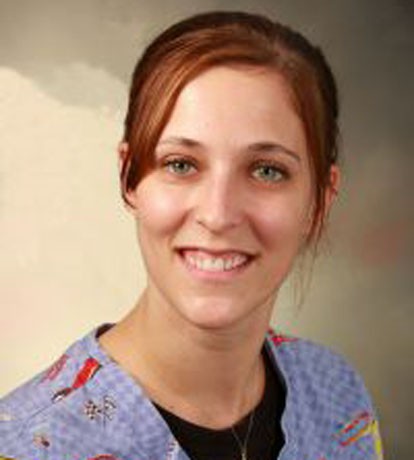
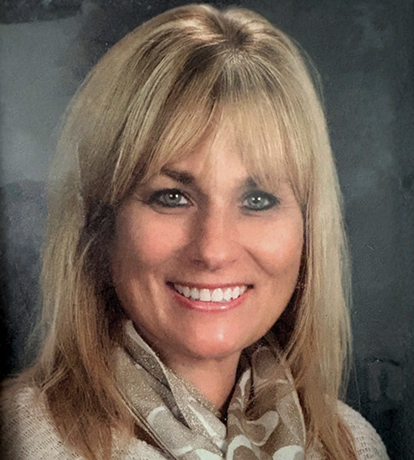
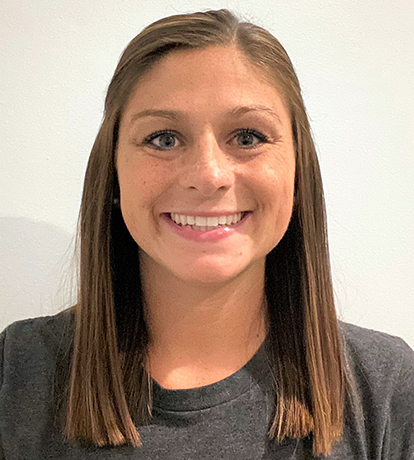
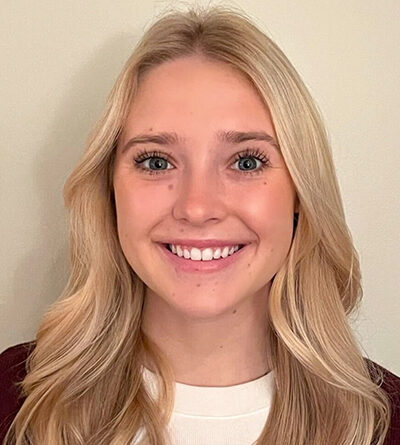
Amy was named the center’s assistant director in 2024 after serving as the director of occupational therapy and sensory integration programs since 2014.
She earned her bachelor’s degree in occupational therapy from Wayne State University.
Amy has previous experience working with inpatient orthopedic and outpatient pediatric patients in the hospital setting, as well as with spinal cord and traumatic brain injury cases.
She has been named a “Mom Approved Doc” by the readers of Metro Parent magazine.
Amy and her husband Josh have three children, and a crazy Australian Shepherd named Sadie.
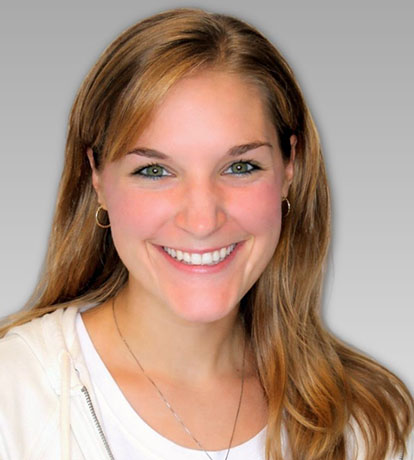
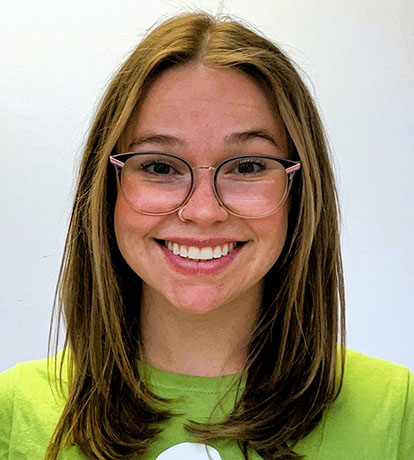
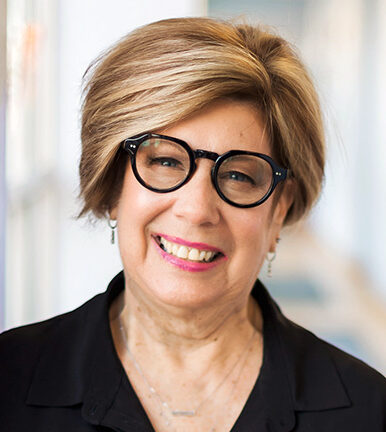
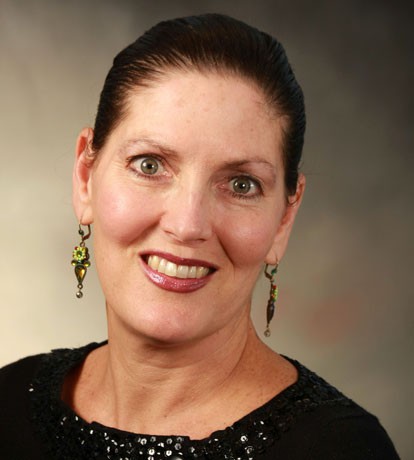
Jeanette earned her bachelor’s degree in science and master’s degree in occupational therapy at Eastern Michigan University.
She was named the director of occupational therapy and sensory integration programs in 2024 after serving as the program’s assistant director since 2014.
Before coming to the KCC, Jeanette worked in a private pediatric sensory clinic in Chicago.
She presented at a national conference on CDKL5 after being invited by the parents of a child she treats with the rare genetic disorder.
Jeanette and her husband Greg have two sons and a daughter.
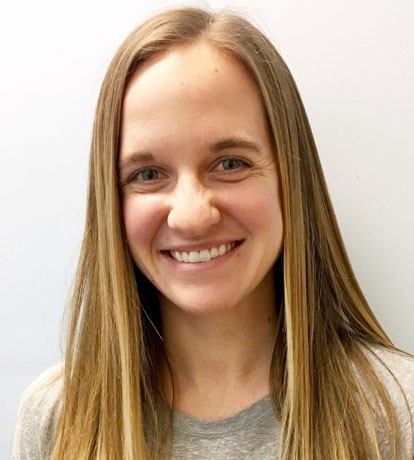
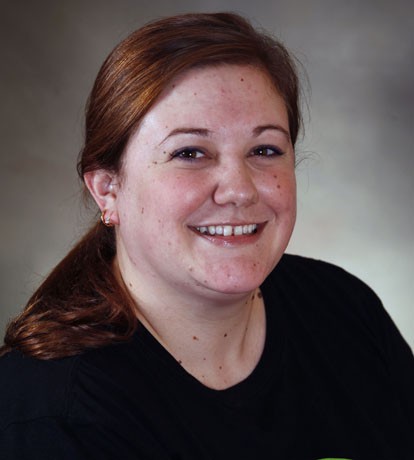
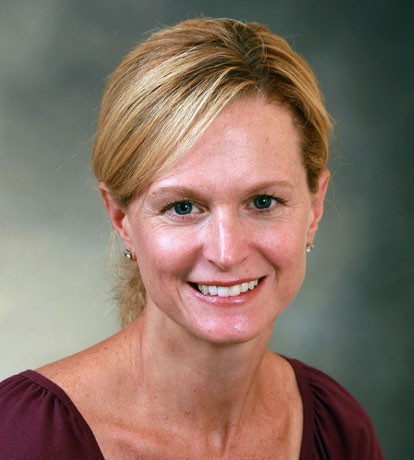
Erin received her bachelor’s degree from Alma College and her master’s in occupational therapy from Wayne State University in 2015.
She also has experience as an OT in the school setting and has facilitated many camps for the KCC.
Erin played softball at Alma College and loves to stay active with running, hiking, and gardening.
She married her husband in 2024. They have a dog named Farley.
Erin is an avid supporter of mental health!
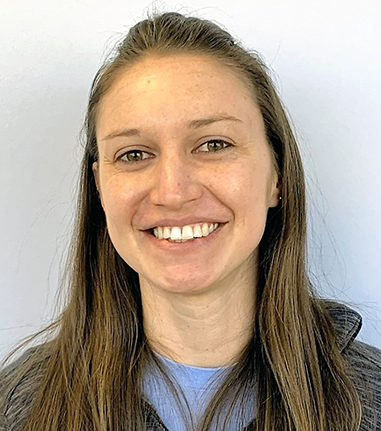
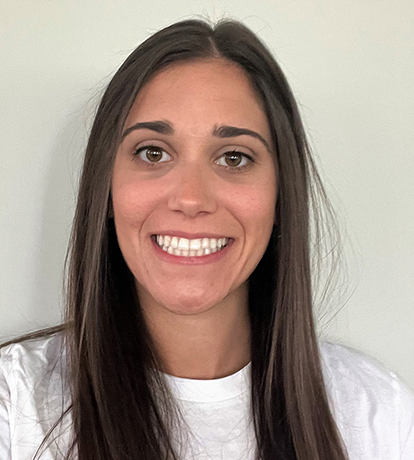
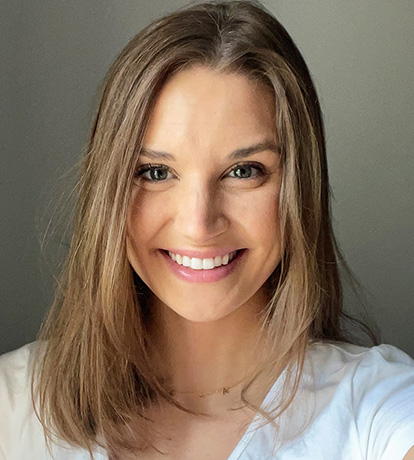
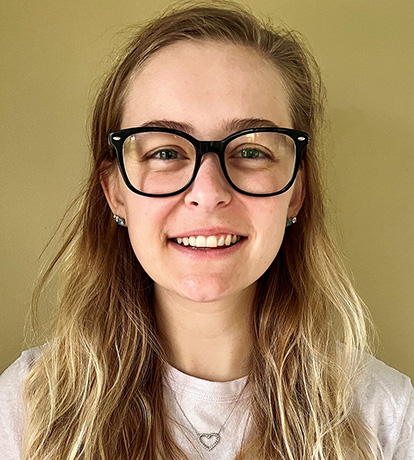
Carmen earned her BA in sociology from Chapman University and both a BS in health sciences and master’s in occupational therapy from Wayne State University.
She completed her level II field work here at the KCC.
Carmen previously worked as a nanny for children with ASD, a lifeguard and swim instructor, and as a diversity and equity program assistant.
She enjoys playing board games with her friends and boyfriend, reading, swimming, and finding new hikes around Michigan.
Marjorie earned her bachelor’s in occupational therapy from Eastern Michigan University.
She previously worked at the KCC as OT director before moving on to Buffalo Hearing & Speech Center in New York.
Marjorie has experience with early childhood programs in both the school and clinic settings and developed OT clinics for Sensory Systems.
Marjorie is married with two children. She enjoys yoga and is a dog lover, especially of her rescue Beagle mix.
Hadley earned her doctorate degree in occupational therapy from the University of Michigan-Flint. Her undergrad is in exercise science with a minor in deaf studies from Xavier University. In addition to her fieldwork in pediatrics, she has experience as a daily living teacher and coordinator for adults with different abilities.
Hadley loves weightlifting and building Legos! She credits her time in the gym for her ability to play and keep up with kids on the floor, in bouncy houses, in ball pits, and anywhere else therapy takes her.
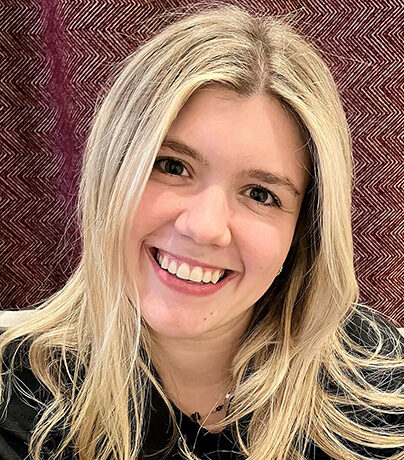
Sandra earned her bachelor’s in health science and master’s in occupational therapy from Baker College.
She was twice named a “Mom Approved Doc” by the readers of Metro Parent magazine.
Sandra has two dogs (rescues named Maya and Ellie) and enjoys reading, cooking, and shopping.
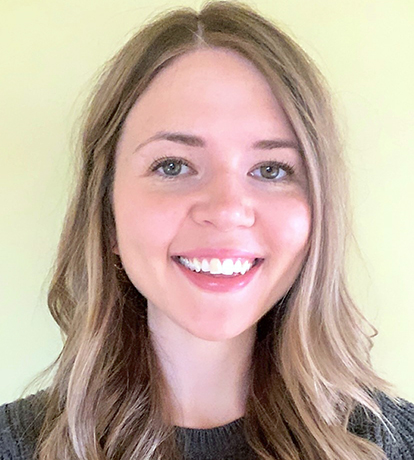
Jamie earned her bachelor’s degree in kinesiology from Michigan State and her master’s in occupational therapy from Western Michigan.
She completed her level 2 fieldwork here at the KCC.
Throughout college, Jamie worked as a research assistant, teaching fundamental motor skills to children on the autism spectrum. She has also worked as a nanny and soccer coach.
Jamie enjoys being outside running, biking, paddle boarding and spending time with her dog, Theo.
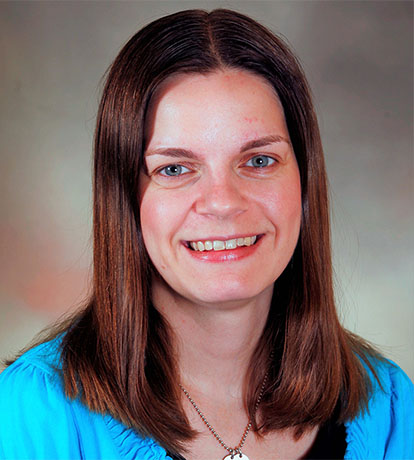
Julia earned her bachelor’s degree in behavioral sciences from Concordia University and her master’s in occupational therapy from Eastern Michigan.
Throughout college, Julia worked as a preschool aide and did her level two student fieldwork working with kids with severe autism, ADD/ADHD, traumatic brain injuries, and spinal cord injuries.
She enjoys spending time with her family and doing anything outdoors, such as camping and going to the beach.
Julia married her husband John in 2022.
Meet our team of speech-language pathologists
Meet our team of
BCBAs and techs
Meet those supporting
your child's treatment
When it comes to sensory and motor issues, the sooner children receive intervention the better. If you feel that any of these signs and symptoms apply to your child and you would like to speak to one of our staff members, please feel free to contact us at (248) 737-3430 or by email. We look forward to helping in any way that we can!
Gross motor delays may be indicated by difficulties with jumping, hopping, balancing, skipping, or running.
A coordination disorder may be indicated by clumsiness, awkwardness of movement, and completing motor tasks by more difficult means than necessary. Children with coordination delays are often hesitant to attempt new tasks.
Not all children with learning, developmental, or behavioral problems have an underlying sensory integration disorder. There are certain indicators, however, that can signal that a disorder may be present. The following are a few of the possible signs.
Typically, a child with a sensory integration disorder will show more than one of the above signs and may also be easily distracted, have social and emotional difficulties, be impulsive and lacking in self-control, have an inability to unwind or calm themselves, and difficulty with transitions between situations.
Feeding issues can include inadequate intake, food refusal, being selective about the type or texture of food, expelling or packing/pocketing food, oral motor weakness, gagging, biting of tongue or cheeks while eating, and difficulty using utensils.
Oral motor challenges may be indicated by difficulty chewing, sucking, blowing, and/or making certain speech sounds. Children are often unaware of food on their faces, have trouble keeping food in their mouths, or moving food around their mouths. The child may present with low muscle tone in the face (“long” or “droopy”), a “flat affect” look, open-mouth breathing, or excessive drooling.
Fine motor challenges may be indicated by difficulty with writing, self-feeding, self-dressing (buttons, zippers, snaps, tying), using utensils, and other hand skills.
Occupational therapy treatment at KCC begins with a full evaluation. Visit our intake form here to get started.

We're here to help!
Reach out with questions
We're happy you're interested in joining our team. Open positions at the KCC are listed below. Application instructions vary by job and are listed in individual postings. We hope to meet you soon!
We provide equal employment opportunities to all qualified persons based on merit and qualifications, without regard to sex, race, color, religion, national origin, age, height, weight, marital status, pregnancy, disability, veteran status, genetic information, sexual orientation, gender identity, or any other classification or characteristic protected by law.
Our staff is excited to help you get started at Kaufman Children’s Center! Here’s what to expect...
Please give us some basic information about your child via our intake form HERE. You can also request occupational therapy services on the same form.
You will receive a notification by email that we received your information. If there is a current wait list, it could be several weeks before we reach out to schedule your evaluation. If you would like an update, please call our office at 248-737-3430 or reach out to Dawn Fields by email.
An evaluation by a KCC speech-language pathologist is required before therapy can begin. This allows us to formulate goals based on first-hand knowledge of your child. The evaluating SLP will go over your child’s background with you, then the fun begins. Our therapists are entertaining and truly know how to engage children. The bulk of the evaluation will be spent one-on-one with your child, but you are welcome to watch from one of our observation rooms.
At the end of the evaluation, the SLP will go over their findings with you. If therapy is recommended, our front office staff will make every effort to provide a schedule that works for your family. The SLP will follow up with a formal, written report of their evaluation findings.
KCC bills directly to Blue Cross Blue Shield, Blue Care Network, and Health Alliance Plan. For all other insurance plans, payment is the responsibility of the parent. Our front office staff is happy to provide you with the codes you will need to try to get reimbursement from your insurance company. The fee for evaluations is due the day you are here, and all other therapy is billed on a monthly basis. Payment is accepted in cash, check, Visa, or MasterCard.
All members of the KCC staff represent the highest standards of excellence in their field and have extensive experience in pediatric therapy. Continuing education is supported and encouraged to ensure our methods are as up-to-date as possible. Our staff members are part of the KCC team because of their expertise, outstanding clinical skills, and their warmth and insight into children.
Nancy is the owner and director of Kaufman Children’s Center and a renowned expert on the topic of childhood apraxia of speech (CAS). In addition to working with local children, she offers intensive speech and language programs that bring families from other states and around the world to work with her at the KCC.
Since 1979, Nancy has dedicated herself to developing the Kaufman Speech to Language Protocol (K-SLP) methods and materials to help kids become effective vocal communicators. She lectures internationally and over 20,000 speech-language pathologists have learned the K-SLP directly from the creator.
Nancy earned her bachelor’s degree at Michigan State University and her master’s at Wayne State University, having been awarded a graduate assistantship. She and her husband reside in West Bloomfield, Michigan and have three grown children, a son-in-law, and two granddaughters.
Honors & awards:
Additional career highlights:
Visit Nancy’s page to learn more about her methods and the services she offers
Jennifer earned a bachelor’s degree in communication arts and sciences from Michigan State University with high honors. She completed her master’s in speech-language pathology at Wayne State.
She was named clinical director of the speech and language department at KCC in 2024.
Jennifer’s experience includes evaluation and treatment in public schools, hospitals, rehabilitation centers, and skilled nursing facilities. She has worked exclusively in pediatrics at KCC since 1999.
Jennifer lives in West Bloomfield with her husband and three children. She enjoys time with her family, boating and being by the water, and staying active.
Kristi earned her undergrad degree at Central Michigan University and her master’s in speech and language pathology from Nova Southeastern University.
Kristi was an ABA tech at KCC before becoming an SLP. She has a wide range of pediatric speech experience, including private practice, mobile private practice (where she treated at private schools and childcare centers), public schools, and outpatient hospital settings.
Kristi enjoys spending time with her husband and their young son and daughter and doing anything outdoors.
Amanda earned her bachelor’s degree in psychology and her master’s in communicative sciences and disorders at Michigan State University.
She has worked as an SLP in both pediatric inpatient and outpatient settings as well as acute care settings.
Amanda is a new mom to a baby girl. She also has a mini goldendoodle named Copper.
Lara earned her bachelor’s degree in communicative sciences and disorders from Eastern Michigan University and a master’s in the same subject from New York University.
Lara loves reading and kayaking in her free time. She has two dogs (Laney and Teddy) and they enjoy going for walks to the lake together.
Shadya earned her undergrad degree in biology and psychology at the University of Michigan and her master’s in speech-language pathology from Wayne State.
Before joining us at KCC, she worked with children in the schools and in an ABA outpatient clinic. Shadya also has experience using a holistic approach to work with people who stutter at the speech clinic at Wayne State.
She enjoys watching nature and spending time with family, including her niece and nephews.
Elle received her bachelor’s degree in speech and hearing sciences at Northern Michigan University. She went on to earn her master’s in speech-language pathology at St. Ambrose University.
Elle worked as a clinical intern at University Center for Literacy and Language and was a lead speech therapy practice associate at Chicago Speech Therapy.
She enjoys playing pickleball, reading, being outside, traveling, and spending time with her family and friends.
Melanie earned both her bachelor’s and master’s degrees in communicative sciences and disorders from Michigan State University.
She has worked as a pediatric SLP in school-based, outpatient hospital, and private practice settings.
Melanie enjoys traveling, being by the water in the summer, and spending time with her family.
Christina earned her bachelor’s degree in communication disorders at Northern Michigan University in 1999 and followed up with a master’s in speech pathology from NMU in 2001.
Before coming to the KCC, she worked for many years at a school for children with autism in Illinois.
Christina was named a “Mom-Approved Doc” by the readers of Metro Parent magazine in 2014. She has two children.
Alanna earned her undergrad degree at Michigan State, majoring in communications with a minor in communicative sciences and disorders and earning high honors. She went to Grand Valley State for her master’s degree in speech and language pathology.
Alanna loves traveling, trying new things, and spending time with family and friends.
Marla earned her bachelor’s degree in psychology from the University of Windsor and her master’s in speech-language pathology from Wayne State.
In addition to her regular individual speech sessions at the KCC, Marla is our clinical director and evaluates children ages 6 and up.
She enjoys spending time with her family, being outdoors (especially in or on the water), and curling up with a good book.
Meet our team of
occupational therapists
Meet our team of
BCBAs and techs
Meet those supporting
your child's treatment
When it comes to communication issues, the sooner children receive intervention the better. If you feel that any of these signs and symptoms apply to your child and you would like to speak to one of our staff members, please feel free to contact us at (248)737-3430. We look forward to helping in any way that we can!
Childhood apraxia of speech (CAS) is a neurological childhood (pediatric) speech sound disorder in which the precision and consistency of movements underlying speech are impaired in the absence of neuromuscular deficits (abnormal reflexes, abnormal tone). CAS may occur as a result of known neurological impairment, in association with complex neurobehavioral disorders of known or unknown origin, or as an idiopathic neurogenic speech sound disorder. The core impairment in planning and/or programming spatiotemporal parameters of movement sequences results in errors in speech sound production and prosody.
The following are symptoms of CAS:
The following articulation errors are typical of preschoolers and are usually not cause for concern. If they persist past age five, an evaluation is necessary.Frontal and lateral lisps
Dysarthria (flaccid) is a speech disorder caused by dysfunctional or damaged innervation to the speech musculature (tongue, lips, soft palate, facial muscles, larynx). Generally, oral musculature is weak. Some children may have a functional dysarthria, due to inappropriate carriage of the tongue at rest.
The following are signs of dysarthria:
Many children with apraxia of speech have an accompanying oral-motor weakness. Usually, working on the apraxia inadvertently helps to strengthen weak articulatory contacts.
Severe dysarthria can be such a significant obstacle to motor-speech skill development in that the average listener may not be able to decode their speech. Children with severe dysarthria will require an augmentative communication system.
Children with expressive language disorder have difficulty with verbal expression (putting words together to formulate thoughts).
The following are symptoms of expressive language disorder:
Receptive language disorders include central auditory processing disorders (CAPD), aphasia, comprehension deficit, “delayed language,” and “delayed speech.” Receptive language disorders also refer to difficulties in the ability to attend to, process, comprehend, retain, or integrate spoken language.
The following are symptoms of a receptive language disorder:
Please note: Children with autism spectrum disorders often have difficulty decoding spoken language and may tend to memorize rather than have a true understanding of novel language.
Social pragmatic language disorder may also be known as semantic/pragmatic language disorder, nonverbal learning disability (NLD), or even autism/Asperger's syndrome.
The following are symptoms of social pragmatic language disorder:
Unintelligible speech is a descriptive term used subjectively by the listener. It can be due to a few minor consonant or vowel errors, oral-structural differences, oral-motor weakness, dysarthria or apraxia of speech.
However, another casual factor to unintelligible speech, which even many professionals miss, is that of the faulty perception of language. Children who have difficulty processing and comprehending spoken language, particularly children who exhibit autism spectrum disorders, may exhibit jargon (sometime called “gibberish,” or unintelligible speech).
It is important to uncover whether a child has an unusual capacity to memorize dialogue, which doesn’t necessarily hold any meaning for them and are reiterating it the way they perceive it, without attaching meaning. In this case, the more emphasis there is upon improving processing and comprehension skills, the more improvement will be seen in increased intelligibility. Whereas, unintelligible speech rooted in the fine-motor coordination aspect of talking would require motor-speech or verbal motor work.
Children may have both perceptual and motor-speech difficulties. If there are any questions regarding whether the child comprehends spoken language, attention should be given to comprehension and not necessarily motor-speech output.
Stuttering affects the fluency of speech. It begins during childhood and, in some cases, lasts throughout life. The disorder is characterized by disruptions in the production of speech sounds, also called “disfluencies.” Most people produce brief disfluencies from time to time. For instance, some words are repeated and others are preceded by “um” or “uh.” Disfluencies are not necessarily a problem; however, they can impede communication when a person produces too many of them. (ASHA)
Speech-language pathologists at the KCC do not treat stuttering. Please contact us at (248) 737-3430 for a referral.

Click below for information on therapy at KCC
We're here to help!
Reach out with questions
Childhood apraxia of speech (CAS) is the difficulty producing and/or sequencing the oral motor movements necessary to produce and combine consonants, vowels, and syllables to produce words and maintain their motor plans upon volitional muscle control.
Other characteristics that may describe children with CAS, but are less likely to contribute to a differential diagnosis include:
Note: A speech and language pathologist must be involved to rule out other possibilities as primary reasons for the above-mentioned signs and symptoms. Simple "late talkers" can have similar characteristics.
Childhood apraxia of speech can and often does coexist with other speech and language challenges. It requires proper diagnosis and treatment by an experienced speech-language pathologist.
Apraxia of speech is usually treatable with the appropriate techniques. Children must be seen one-on-one, at least in the early stages of treatment, even as early as age 2.
Kaufman Speech to Language Protocol is a highly effective program with young children. It is currently the #1 tool used to treat childhood apraxia of speech in the US (source) and is used by speech-language pathologists in many other countries. The approach is also now being accepted and implemented into applied behavior analysis (ABA) and applied verbal behavior (AVB) programs for children on the autism spectrum.
K-SLP materials, including Kaufman Speech Praxis Test for Children, Kaufman Speech to Language Treatment Kits, Kaufman Speech to Language Workout Book, and K&K Sign/Select to Talk, are helpful tools to diagnose apraxia, determine treatment goals, and provide effective therapy.
It is imperative that children with childhood apraxia of speech gain as much practice as possible, and that is not limited to official speech session. Involvement from parents and caregivers in the child's natural environment (home, school, community) is essential for the practice needed.
With quality therapy specific to childhood apraxia of speech and support from their community, many children can make progress becoming successful vocal communicators!