Feeding Therapy

Addresses picky eating, oral motor weakness, and many other challenges

Just as each child is unique, their challenges with food also vary greatly from one to the next. Feeding issues can include inadequate intake, food refusal, being selective about the type or texture of food, expelling or packing/pocketing food, and dependence on a G-tube. Research indicates that feeding issues in children can have many causes, including behavioral, sensory, and oral motor factors.

Areas of concern often addressed by pediatric occupational therapists include:

ORAL DESENSITATION FOR FEEDING & MOUTH ACTIVITIES: These include general assessment and treatment of a child’s sensory issues in relation to feeding and oral motor function techniques.  The activities include use of tactile & body sensory activities.  It is a slow, systematic approach to changing color, form, taste and textures of foods to enhance a child’s food repertoire.  Deep pressure touch protocol to the mouth is used to allow the child the ability to participate in more intense types of oral motor activities.

ORAL CRANIOSACRAL THERAPY: Craniosacral techniques to localize restrictions and restore normal motion to the bones of the face and mouth. A restriction is an impairment of normal physiological motion within the body. By normalizing motion of the structures of the mouth, children are able to integrate sensory motor and oral motor activities on a more aligned structural base.

TALK TOOLS®: Sara Rosenfeld-Johnson, SLP of Tucson, Arizona, has developed tools for improving oral strength (lips, tongue and jaw), refining of tongue placement required for articulation, and enhancing breath support for adequate respiration, phonation and resonation, all required for speech skills. These “tools” come in the form of various horns and straws, each with a particular skill in mind to acquire. The program also uses functional and fun exercises. The tools and exercises are also recommended for home programs to ensure best results.

BECKMAN ORAL MOTOR INTERVENTION: Debra Beckman, SLP, Orlando, Florida has developed non-invasive quick muscle stretches and deep tissue releases for the face and mouth. These releases help to decrease frenulum tissue restrictions inhibiting range of movement of the lips, cheeks and tongue, take minutes to occur, and are completed with a comfortable light touch in the mouth. The quick muscle stretches are meant to facilitate muscle contraction and are followed by active exercises to gain strength and function. The stretches are given to the tiny muscles of the face and mouth, are also non-invasive and light in application. These techniques are used in home programs with instruction for best results.

Questions?

We're here to help!
Reach out with questions

Sensory Integration Therapy

Helping children process sensory information from their environments

Sensory integration is the brain’s ability to take in, process, and organize the information provided by all the sensations coming from within the body and from the external environment.   This is how we perceive our surroundings and the people and physical objects in it, how we relate our body to them, as well as how they relate to each other. Because our brain uses information about sights, sounds, textures, smells, tastes, and movement in an organized way, we assign meaning to our sensory experiences, and know how to respond accordingly.

For children with sensory integration dysfunction, their neurological system is unable to appropriately manage input from the senses, making it difficult to figure out what is going on inside and outside their bodies.  As a result, a child may avoid confusing or distressing sensations, or seek out more of the sensation to find out more about it. Because they cannot rely on their senses to give them an accurate picture of the world, they are unsure how to respond, and may have trouble learning and behaving appropriately.

Some indications of a possible sensory integration/processing disorder include:

OVERSENSITIVITY OR UNDERSENSITIVITY TO TOUCH: Avoids being touched, refuses to wear certain clothing, crashes into people/things, prefers hot bath water, high pain tolerance.

UNDERREACTIVE OR OVERREACTIVE TO MOVEMENT SENSATIONS: Seeks out movement like swinging, twirling, jumping, or is fearful of movement, avoids active games, gets dizzy very easily.

AUDITORY SENSITIVITY: Excessively strong or virtually no response to loud or unusual noises, unusually high or low voice volume, easily distracted around a lot of noise.

UNUSUALLY HIGH OR LOW ACTIVITY LEVEL: Constantly on the move or moves slowly and tires easily.

TASTE AND/OR SMELL SENSITIVITY: Is a “picky eater:”  limited repertoire of acceptable foods, difficulty tolerating various food textures, gags easily, craves spicy foods, offended by certain smells.

Sensory integration therapy looks like play. For example, you may see your child swinging (vestibular sense), pulling a rope to speed up the swing (proprioceptive sense), catching fidget toys (tactile sense), and throwing them in a bucket (visual sense), all while wearing a pair of headphones (auditory sense). The idea of SI therapy is to employ carefully selected therapeutic sensory experiences and physical interaction to enhance sensory integration in order to improve learning, behavior, and quality of life.


Questions?

We're here to help!
Reach out with questions

Occupational Therapy

Helping children achieve independence in daily life activities

Occupational therapy is skilled treatment that focuses on a child’s ability to achieve independence and participate in daily life activities, including play, self-care, school/community participation, and socializing. These “skills for the job of living” are necessary to ensure satisfying, fulfilling, and independent lives.

Occupational therapists (OTs) use their unique expertise to help children with social-emotional, physical, cognitive, communication, and adaptive behavior challenges. OTs design interventions that promote healthy development, establish needed skills, and/or modify environments, all in support of participation in daily activities. Since the work of children is play, it is through the use of this media that occupational therapists assist children in learning needed skills. Therapy can enhance the potential of a child throughout their developmental years and build self-confidence and self-esteem that last a lifetime.

Areas of concern often addressed by pediatric occupational therapists include:

SELF-CARE SKILLS: Difficulty with feeding, bathing, dressing, and grooming.

SENSORY INTEGRATION DISORDERS:  Oversensitivity or undersensitivity to sounds, smells, sights, touch, movement, taste, and difficulty with the sense of body awareness.

DIFFICULTIES WITH FEEDING AND OTHER ORAL-MOTOR SKILLS:  Trouble chewing, drinking from a straw, or tolerating various food textures.  May be a “picky eater.”

FINE MOTOR SKILL CHALLENGES: Difficulty with writing skills, buttons/snaps, use of utensils & scissors, and grasping or picking up small objects.

PROBLEMS WITH MOTOR COORDINATION: May be awkward, seemingly careless, accident-prone, or “clumsy.”  May have difficulties with activities such as standing on one foot, catching a ball, or sitting to tie shoelaces. May be hesitant or nervous to try new tasks or activities.

Questions?

We're here to help!
Reach out with questions

Grants for Travel Expenses


Please note that each grant resource is from an independent organization; none are associated with the Kaufman Children's Center. The KCC has made every effort to provide high-quality and helpful grant information, but we cannot be held liable for errors or the quality of the grant sources. Information should be independently verified and confirmed. Questions about specific grants should be addressed to the organization offering the grant. 


Air Care Alliance – Nationwide volunteers perform public benefit flying for health care, patient transport, disaster relief, educational experiences for youth, environmental support, and other missions of public service.

Angel Flight – Arranges free air transportation for legitimate, charitable, medically related need. Available to individuals, and health care organizations.

Angel Bus – Provides compassionate, non-emergency long-distance ground transportation to patients in need.

Miracle Flight – Helps families overcome financial obstacles by providing financial assistance so that their seriously ill children can receive proper medical care and to get second opinions.

National Patient Travel Center – Ensures that no financially needy patient is denied access to distant specialized medical evaluation, diagnosis or treatment for lack of a means of long-distance medical transportation.

Additional Resources:

Help Us Help Others!

If you receive help from a grant source not listed here or find that a grant is no longer being offered, please email us know so we may update our list for the benefit of other families. Thanks for your help!

Autism Grant Sources


Please note that each grant resource is from an independent organization; none are associated with the Kaufman Children's Center. The KCC has made every effort to provide high-quality and helpful grant information, but we cannot be held liable for errors or the quality of the grant sources. Information should be independently verified and confirmed. Questions about specific grants should be addressed to the organization offering the grant. 


ACT Today – Raises awareness and provide treatment services and support to families to help their children with autism achieve their full potential.

Autism Assistance Resources & Information – Grants, financial assistance, funding strategies and other resources to help families coping with autism and other disabilities. List of small local granting agencies which give to families and organizations.

Autism Speaks – List of several grant resources.

Avenues for Autism - Assistance for families with unimaginable expenses of raising a child with autism.

Doug Flutie Jr. Foundation for Autism – Helps families affected by autism get access to services, lead more active lifestyles, and grow toward adult independence.

iTaalk - Grants IOS technology to children (ages 0-22) with an autism diagnosis and provides educational apps to parents and professionals working with anyone with a disability.

MyGOAL - Grant to enrich the body, mind, and spirit of individual(s) with autism spectrum disorder, resulting in a higher quality of life.

National Autism Association Family First Program – Helps qualified families pay for medical services used to treat individuals diagnosed with autism.

National Autism Association Give a Voice Program - Provides communication devices to individuals with ASD.

Pervis Jackson, Jr. Autism Foundation - Provides comfort to parents of children affected by autism and other disabilities.

Project iAm – Provides support and information, resources, and financial assistance to families affected by autism.

Talk About Curing Autism Family Scholarship Program – Scholarships help families pay for physician-prescribed services, and include stop gap medical treatments, independent assessments, and other necessary crisis funding.

Additional Resources:

Help Us Help Others!

If you receive help from a grant source not listed here or find that a grant is no longer being offered, please email us know so we may update our list for the benefit of other families. Thanks for your help!

Grant Search Engines


Please note that each grant resource is from an independent organization; none are associated with the Kaufman Children's Center. The KCC has made every effort to provide high-quality and helpful grant information, but we cannot be held liable for errors or the quality of the grant sources. Information should be independently verified and confirmed. Questions about specific grants should be addressed to the organization offering the grant.

Assistive Technology Funding Resources Guide – Broad range of potential sources of funding for assistive technology.

Benefits.gov – Search of government benefits and grants.

Disability Resources – Resource index

Fundsnet Services – Grantwriting and fundraising resource information.

Government Clinical Trials – Listing of medical research programs being conducted.

Grants.gov  – Allows organizations to electronically find and apply for grants offered by federal grant-making agency.

International Center for Disability Resources – Seeks to increase opportunities for people with disabilities by identifying barriers to participation in society and promoting best practices and universal design for the global community.

US Department of Education – Large listing of grants available.

USA.gov - Financial assistance and support services for people with disabilities; explore a wide range of programs and tools to help with housing, taxes, medical bills, service and emotional support animals, and more.

Additional Resources:

Help Us Help Others!

If you receive help from a grant source not listed here or find that a grant is no longer being offered, please email us know so we may update our list for the benefit of other families. Thanks for your help!

Special Needs Grants


Please note that each grant resource is from an independent organization; none are associated with the Kaufman Children's Center. The KCC has made every effort to provide high-quality and helpful grant information, but we cannot be held liable for errors or the quality of the grant sources. Information should be independently verified and confirmed. Questions about specific grants should be addressed to the organization offering the grant. 


Alyssa V. Phillips Foundation - Provides financial support to those impacted by CP so they can receive ongoing and necessary therapy or equipment not covered by insurance.

Astra Zeneca – Offers free medication to people who earn $30,000 a year or less, or a family of four making up to $60,000 a year.

Aubrey Rose Foundation - Helps families with children who are currently living with a life-threatening medical condition.

Believe in Tomorrow – Pediatric hospital housing and respite housing.

Blind Citizens - Assistive Technology Fund (ATF) provides funds to cover 50% of the retail price of adaptive devices or software.

Byron Riesch Paralysis Foundation - Provides assistance to those that suffer from neurological disorders.

Bright Steps Forward – Grants for state-of-the-art therapy techniques, along with more traditional physical therapy methods to achieve rapid strides in physical strength and coordination.

Children’s Charity Fund – Provides services and purchases medical equipment for handicapped and disabled children, provides educational grants to help children further their education.

Different Needz Foundation – Offers special needs families a one-stop shop to buy and sell their gently used medical and special needs equipment and adaptive toys. They also have a grant available to purchase such items as well.

Disabled Children’s Fund – Provides assistance to obtain wheelchairs, orthopedic braces, walkers, lifts, hearing aids, eye glasses, medical equipment, physical therapy, and surgery.

Easter Seals – Provides services to help children and adults with disabilities and/or special needs as well as support to their families.

Faith and Family Foundation/Wheatland Farm – Offers scholarships for children with disabilities to participate in therapeutic riding, adaptive swimming and a variety of programs.

Family Hope Foundation – Invests in children with special needs through family support, engaging community experts, advocacy through collaboration, and financial assistance to provide access to therapies.

Federal Grant Wire – 60 children’s federal grants, government grants and loans.

Financial Resources and Discounts for Students with Disabilities – guide to various financial resources, discounts and savings opportunities, and travel tips for students with disabilities.

Flyin Ryan Foundation - Adventure scholarships based on financial need, character which reflects Ryan's principles of living, and demonstrated passion to pursue your adventure of choice.

Friends of Man – Grants for therapy, equipment and other needs. Must have a sponsor such as an agency or social worker to apply.

Giving Angels Foundation - Enhances the lives of children under the age of 21 with any type of physical disability or illness.

Grottoes of North America Humanitarian Foundation – Helps cover the costs of dental treatment, including hospital and anesthesia costs when needed, for children with cerebral palsy, muscular dystrophy (and related neuromuscular disorders), organ transplant recipients or those with intellectual disabilities.

Hands to Angels - Supports the ongoing research of rare genetic disorders and to assist families dealing with the mounting medical bills and lost wages due to complications of a genetic disorder.

Heelers 4 Heroes - Trains Australian Cattle Dogs for veterans, first responders, and civilians alike at no cost.

Hero Healthcare Equipment Recycling Organization - Helps those in need of healthcare supplies.

Humanitarian Foundation - Helps cover the costs of dental treatments.

iTaalk – List of funding sources for communication devices.

Jack’s Place (Michigan) – Helps families with children affected by autism afford the support they need for a variety of programs.

The Jiselle Lauren Foundation - Helps any family whose child has a special need or disability achieve things that wouldn't be possible otherwise.

Kiddie Pool – Works as a fundraiser to help families raise money for special adaptive equipment.

Kya’s Krusade – Provides financial assistance for adaptive equipment and physical therapy, occupational therapy and hippotherapy sessions.

The LENN Foundation - Helps children with cerebral palsy by providing financial relief for medical needs.

Lindsay Foundation – Assists families with resources necessary to provide medical treatment, therapies and rehabilitative equipment in order to improve the quality of life for their special needs children.

Lori's Voice - Enriches the lives of children with muscular, neurological, and other degenerative diseases.

Midwest Council for Children with Disabilities - Provides families of disabled children the means to pursue medical treatment and therapies not covered by health insurance.

McLindon Family Foundation - Provides adaptive bikes to children with special needs.

Mike's Kids - Provides assistance via services, equipment, education, special care, and respite support to children with special needs and their families.

Molly Bear Foundation - Financial assistance to families raising children with Trisomy 18 for medical expenses and beyond.

Morgan Project – Provides resources, gently used disability equipment and small grants.

My Gym Foundation - Grants up to $500 to children with physical, cognitive, or developmental disorders for rehabilitation therapy, assistive devices, medical equipment, or sensory items.

Multiple Sclerosis Foundation - Several grants for families affected by the disease.

Net Wish Foundation - Grants $200 to individuals that find themselves in serious financial trouble.

The Orange Effect - Empowers children and young adults with speech disorders to effectively communicate through technology and speech therapy.

Oracle Health Foundation - provides pediatric case grants for medicine, surgeries, travel, and equipment; wellness screenings to elementary school students; social-emotional support and education initiatives to middle school students; health education to high school students; and much more.

Oxford HBOT Kids Foundation – The Oxford HBOT Kids Foundation will consider requests for help with alternative therapies or medical treatments not covered by insurance.

Our Military Kids - Grants to children of all Wounded Warriors for sports, fine arts, camps, and academies.

The Parker Lee Project - Provides needed medical equipment and supplies to families of children with special needs.

Parker’s Purpose – Assistance to help fund specialized schooling, alternative therapies, summer camp, respite, sensory items, home modifications, and other needs not covered by medical insurance.

Partnership for Prescription Assistance - Helps qualifying patients without prescription drug coverage get the medication they need through the program that is right for them. Many will get their medication for free or nearly free.

Pervis Jackson, Jr. Autism Foundation - Provides comfort to the parents of children with autism and other disabilities.

Sertoma (Service to Mankind) – International organization that deals mainly with speech and hearing disabilities.

Service Dog Project - Provides Great Dane service dogs to people with balance issues due to neurological diseases or war injuries to assist them in achieving greater independence.

Small Steps in Speech – Assists children with speech and language disorders by funding supplemental therapies and treatments for individuals as well as grants to charitable organizations who serve children with communicative disorders.

Sunshine Foundation – Answer the dreams of chronically ill, seriously ill, physically challenged and abused children, ages three to eighteen, whose families cannot fulfill their requests due to the financial strain that child's illness may cause.

The Trinity Rose Foundation - Provides financial aid that will help improve the quality of life for those with eye disorders.

United Healthcare Children’s Foundation – Grants for medical-related services that have the potential to significantly enhance either the clinical condition or the quality of life of the child and that are not fully covered by the available commercial health benefit plan.

Variety Children’s Charity – Helps kids gain mobility, confidence, freedom, independence and the chance to join in the life of their community by providing funding for walkers, wheelchairs, specially-designed adaptive bikes, strollers, prosthetic limbs and other devices to families with the most need.


Additional Resources:

Help Us Help Others!

If you receive help from a grant source not listed here or find that a grant is no longer being offered, please email us know so we may update our list for the benefit of other families. Thanks for your help!

The Kaufman Speech to Language Protocol

The method at the heart of the KCC's speech-language programs

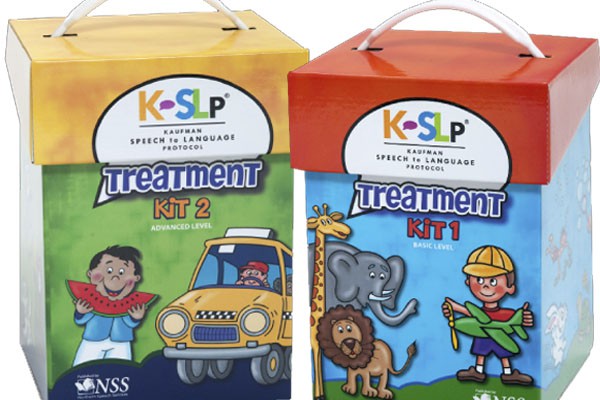
The Kaufman Speech to Language Protocol (K-SLP) is the method at the heart of all of the KCC’s speech and language programs. It is a treatment approach for children with childhood apraxia of speech (CAS), other speech sound disorders, and expressive language challenges. The K-SLP focuses upon the child’s speech-motor skills, shaping the consonants, vowels and syllable shapes/gestures from what they are capable of producing toward higher levels of speech-motor coordination, giving them a functional avenue by which to become an effective vocal communicator.

See "more information" for much more on the Kaufman Speech to Language Protocol.

More Information:

Click below for details on the Kaufman Speech to Language Protocol.

Video Consultations with Nancy Kaufman

Personal feedback for families living out of the state and country


Nancy Kaufman, MA, CCC-SLP would love to meet and evaluate your child in person, but that is often difficult for families who live a great distance from the KCC. Instead, she invites you to submit a video of your child, preferably in a treatment session, for an informal consultation.

How to receive a video consultation:

  1. Record video of your child in treatment sessions, or ask their SLP for clips
  2. Upload your clips to YouTube or Dropbox
  3. Click the 'submit information' link on this page and provide information about your child
  4. At the end of the form, enter the links to your videos and pay the fee
  5. Nancy will review your videos and call you with her recommendations

A few important notes:

  • The video consultation is not a live virtual/online meeting with Nancy. She will review video clips of your child online then call you with her recommendations.
  • Video clips are required; Nancy cannot give recommendations without first viewing your child's current skills.
  • This is not a formal evaluation; no written documentation is included in the video consultation.

VIDEO CONSULTS ARE FOR:

Children who live out of state or in Michigan but an hour or more away from our clinic in West Bloomfield. If you live closer than an hour away, please register for an in-person evaluation here.

Children whose parents would like to bring them to KCC for an intensive visit. It is important to Nancy that her methods will be a good fit for your child before you make the trip. Children will not be scheduled without completing a video consultation.

VIDEO CONSULTS ARE NOT APPROPRIATE FOR:

Children local to the suburban Detroit area who wish to receive ongoing, regular therapy at the KCC. They will require full, in-person evaluations before beginning sessions.

AUTISM SPECTRUM DISORDER

Please note that children with autism spectrum disorder who are minimally vocal are generally not appropriate for intensive programs (more info available here). Nancy is happy to provide advice, but the video consult will not result in an in-person visit.

FEE

The fee for a video consultation is $100. You can pay using our secure service when you fill out the form (see below).

TIPS FOR FILMING:

Video consultations are limited to 30 minutes of footage.

Child working with SLP (BEST):

If at all possible, send video of a therapy session between your child and their speech pathologist. Please have the SLP show actual treatment techniques and not just a speech and/or language sample so Nancy is able to make some useful suggestions.

Please note: It is best if the SLP is interested in working collaboratively with Nancy and is familiar with the K-SLP methods and materials rather than this consultation being imposed on the SLP, who may not be interested or invested in the K-SLP techniques. This should be a positive and desired collaboration with the purpose of working together on behalf of the children!

Child working with a parent:

If it is not possible to film your child in a speech and language session, parents should make sure to film the child demonstrating the skills listed below under content. Video clips should give the best idea of what the child sounds like when they attempt to speak.

Video length:

You may submit up to five links, but the total viewing time cannot exceed 30 minutes.

Content:

  • Focus on the child and be sure that their mouth is visible.
  • If available, administer parts of the Kaufman Speech Praxis Test (KSPT).
  • Have the child imitate a series of isolated vowels, consonant-vowel combinations, words, and phrases.
  • Have the child name common objects.
  • Please say the name of each object after the child does, so that there is a reference for the true word.
  • Try to provide some type of spontaneous speech.

HOW TO FIND VIDEO LINKS

Up to five video links (maximum of 30 minutes total) may be sent for Nancy's review. Follow the directions below to find the links from Dropbox or YouTube you will need to paste into the consultation form.

For security purposes, we are not able to download any clips and are only able to accept videos that Nancy can view online. Please send direct links to individual videos (not folders) posted to Dropbox or YouTube. Your consultation will not be processed if you send links to other sites or by email attachment.

Here are some tips for using Dropbox and YouTube:

Dropbox:

  • Upload your videos following the directions provided Dropbox.
  • Click "all files" for a list of all videos uploaded to your Dropbox account.
  • Right-click on a video's title and choose "copy link address"
  • Paste the link where indicated in the form below. Repeat for up to five links.
  • Very important – If you are sharing several video clips, be sure to send the individual link to each video. DO NOT send links to full folders. Sending that way requires us to download the videos instead of viewing them online and takes up too much space in our Dropbox account.

YouTube:

  • Upload your videos following the directions provided Dropbox.
  • Be sure to set each of your video’s privacy settings to unlisted. This means that only those with the direct link will be able to view your video. We will not be able to view your videos if they are set to private.
  • Click on your video, then select SHARE at the bottom right of the video. Copy the link provided in the pop-up window.
  • Paste the link where indicated in the form below. Repeat for up to five links.
  • Please note: YouTube is an online sharing service. If you are concerned about confidentiality, please use the Dropbox option.

HOW TO SEND YOUR VIDEOS

Submit information about your child and up to 5 video links on our form HERE.

  • Before beginning the form, please upload your video clips to Dropbox or YouTube (a maximum of 5 links and 30 minutes total), and have the links to the videos handy. There are instructions below on how to find those links.
  • Please note: For security purposes, we are not able to download any clips and are only able to accept videos that Nancy can view online. Your consultation will not be processed if you send links to other sites.
  • At the end of the form, you will be able to make your payment for the video using our secure service.
  • Please email Cyndi Davis with any questions.

Submit Information

Click below to visit the video consultation form

Questions?

Contact Cyndi Davis
at the email below

Speech Praxis Experience at Kaufman (SPEAK)

Intensive speech and language program at the KCC


The Speech Praxis Experience at Kaufman (SPEAK) is an intensive speech and language program with Nancy R. Kaufman, MA, CCC-SLP, featuring her Kaufman Speech to Language (K-SLP) methods. It is generally for children who live out of Michigan or in-state but too far to come for regular sessions.

The purpose of SPEAK is for Nancy to evaluate children face-to-face, determine goals, and demonstrate K-SLP techniques. Children generally make progress during the visit, but the main intention is to introduce and explain the methods, coach parents through play, and collaborate with the child's home speech and language team.

SPEAK visits are available year-round and are generally 2-3 days in length. They include:

  • Full speech and language evaluation
  • 3-5 therapy sessions (30 minutes each)
  • A parent conference to review goals and techniques and address questions and concerns

Traveling to Michigan with kids is not an easy operation and Nancy takes that very seriously. She will only recommend an intensive visit if she feels that it will be beneficial for the child and if the child’s team is open to the K-SLP methods and her collaboration. If Nancy does not feel that the child is ready for the intensive program, she will make other helpful recommendations.

To qualify for an intensive visit, children must:

  • Have the ability to imitate consonants, vowels, and syllables
  • Be able to sit and attend for 30-minute sessions, motivated by highly preferred toys and activities

Children with autism spectrum disorder who are minimally vocal are generally not appropriate for the SPEAK program. We have found that these children require much more of a time commitment than half-hour sessions over four days and do best when both speech-language pathologists and behavior analysts work together for their benefit.

Our team approach is implemented through our applied behavior analysis (ABA) program, where we have the opportunity to work with the children for full or half days, four days a week, over many weeks. Click HERE for more information on those programs.

Parents of children with ASD are still encouraged to submit a video for consultation. Nancy can can provide some suggestions and recommendations for techniques and webinars/e-courses that may be helpful.

Once Nancy has evaluated the child in person, she may schedule additional half-hour SPEAK sessions, if appropriate and if her schedule allows. Extra sessions with Nancy are charged at a rate of $100 per half hour.

While at the KCC, many families choose for their children to receive occupational therapy services. Kids with apraxia of speech or other speech-sound disorders often benefit from oral-motor, fine-motor, and even sensory integration therapy. We will arrange an individualized schedule for each child during the time that you are here. OT sessions are an extra fee, charged at a rate of $70 per half hour.

Family members who travel to the KCC with the child are able to watch all sessions through an observation window, and will have the opportunity to participate in parent coaching within some of the sessions.

Each SPEAK therapy session is recorded so families can review and share techniques with the child’s home speech-language pathologist.

If you are interested in having your child participate in a SPEAK visit, your first step is to submit a video to determine if she or he is appropriate for the program. Click HERE for information on how to record and submit a video. Once Nancy reviews the video, she will contact you to get the ball rolling.

Video Consultations

Required before scheduling
an intensive visit

Contact

Questions about the program
and required video consult

Travel Information

Where to stay and fun things
to do in the Detroit area